
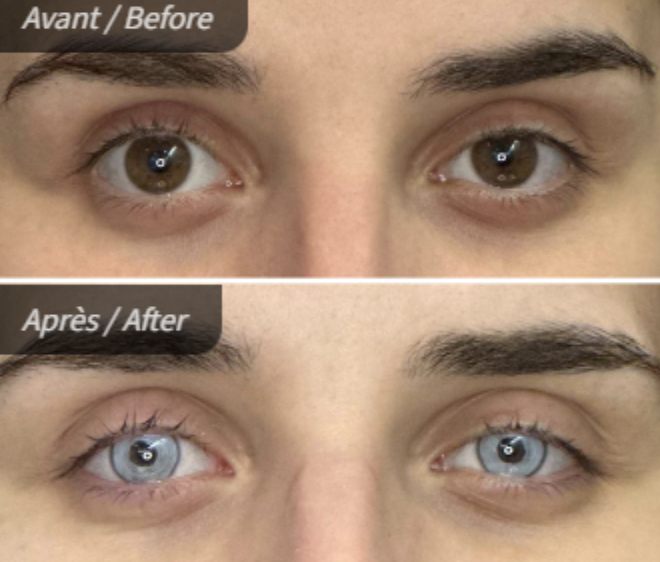
With both long-standing and emerging procedures, the human body has become increasingly customizable. While hair color, tattoos, and facial hair have long been changeable, more dramatic alterations have become increasingly popular. From changing the color of eyes to the shape of your waist, these newer trends can transform people’s appearances.
Other than the very dangerous eye color change procedures, these large surgeries have proven to increase the self-esteem and confidence of many patients. When considering any surgery, especially large cosmetic ones, it’s important to understand the procedure and the risks. Patients should consider their decision carefully, find a trusted specialist, and fully understand the potentially fatal risks involved.
With new technologies, eye color-changing surgeries are now available. Colored contacts have been available since the 1940s, but these newer surgeries are often permanent. The operations have side effects that can lead to inflammation, bleeding, cataracts, and blindness.
Eye color-changing procedures occur in three ways: cosmetic iris implants, laser iris depigmentation, and cosmetic keratopigmentation. All three of these surgeries involve modifying the iris, which is the part of the eye that gives it its natural color.
For cosmetic iris implants, a new iris is placed into your eye with the desired color. There are currently no FDA-approved artificial colored iris implants in the United States, and the American Academy of Ophthalmology issued a warning against this surgery due to the risk of permanent eye damage.
In the second operation, laser iris depigmentation, lasers are used to remove melanin in the iris. Blue eyes do not contain pigment, and the lasers target the pigment-carrying cells to lighten darker eyes. This procedure has not undergone clinical trials in the U.S.
Cosmetic keratopigmentation is the opposite of laser iris depigmentation. Instead of removing pigment, a needle cuts into the cornea to add dye with pigment. This procedure is also known as eye tattooing. This surgery can lead to damage to the cornea, resulting in blindness, infections, and leakage of dye into the eye.
Patients can transform their body shape through liposuction. This is a procedure where fat cells are removed using suction from parts of the body that don’t always react to weight loss. Liposuction can be performed on the abdomen, upper arms, buttocks, chest, back, hips, thighs, and neck. While the fat is removed, the surgeon will sculpt the area to reach the desired shape. The risks of this surgery include scarring, temporary pockets of fluid (seromas), infection, internal puncture, and fat embolism. It can also lead to kidney and heart problems due to the large fluid shifts. Results often do not last if the patient gains weight since the edited areas will return to their larger size. According to the National Institutes of Health in 2006, around 80% of patients are satisfied with their bodies after the procedure. Mastermind Behavior Statistics finds that in 2025, roughly 11% to 30% later regretted the surgery.
Brazilian butt lifts are a surgical procedure where fat is taken from other parts of a patient’s body through liposuction and relocated to the butt to enlarge it and change its shape. The fat is often removed from the abdomen, thighs, or flanks to achieve a thinner and more sculpted appearance. Side effects can include infections, bumps and scarring, bruising, and fat embolism, where fat enters the bloodstream and is potentially fatal. It has the highest mortality rate of any aesthetic surgical procedure. According to the National Library of Medicine, South Florida alone experienced “25 BBL-related fat emboli deaths between 2010 and 2022.”
Rhinoplasty, more commonly known as nose jobs, are popular procedures that change the shape and size of a patient’s nose. They involve a surgeon making incisions to separate the skin and cartilage from the bone. These procedures are most typically performed to achieve a smaller button nose. Not western noses, like bumped noses, hooked noses, and upturned noses, are edited. Side effects can include infection, swelling, difficulty breathing, scarring, and a change in smell. Kathy Zhang, a writer for OAE Publishing Inc., found that 5-15% of patients wanted another surgery to revise their nose, and the satisfaction rates range from 72-89%.