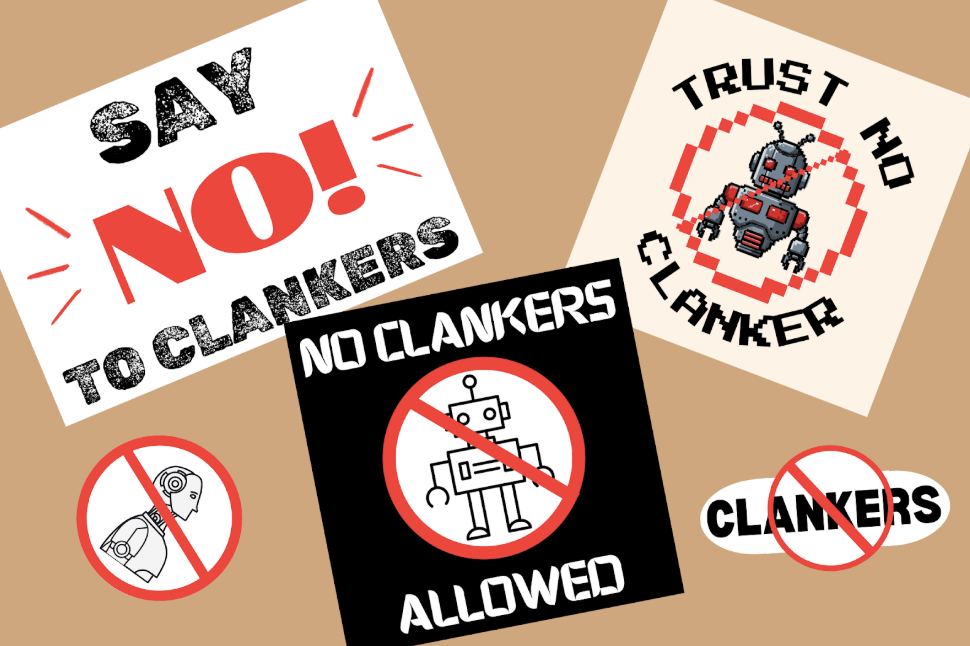
The New York Times refers to “clanker” as a rallying cry against AI. People against artificial intelligence have been coming up with their own insults, like tinskins or wirebacks. On one hand, they shed light on the negative impacts AI can have. On the other hand, the use of AI slurs distracts from the real problems and ways to create a larger change. By blaming the robots and not the large companies behind them, people fail to see the bigger picture. A large portion of the anti-AI art online was created with AI tools. These slurs were not created to counteract this new technology. By mimicking slurs used against minorities, anti-AI words and phrases end up humanizing the machines.
The word “clanker” originated in the video game Star Wars: Republic Commando in 2005. In the game, clanker is used disparagingly to refer to the droids since they make clanking noises when they move around. With the insult growing popular online in 2025, it’s now used against AI. The problem with this word, and the others that followed it, is that they are meant to parody slurs used against racial minorities. Clanker itself is often used like the n-word, with users online mimicking the version of the n-word with “clanka” vs “clanker”. The term “tinskin” has been used online and refers to the metal robots are made out of. It’s very similar to “redskin”, which is a harmful word for native americans. Another common word is “wireback.” This directly mimics the very offensive slur “w**back,” which has been used against U.S.-Mexican immigrants and Mexican Americans.
By using slurs against AI, we are humanizing them. People do not use slurs to insult beings they fear or dislike. There are no special words that are derogatory against snakes or spiders, even though many people are scared of them. As Savoy, Reveille Opinion Columnist, explains, slurs “occupy a peculiar space between human and non-quite-human-enough.” While snakes and spiders are clearly sub-human, AI is beginning to occupy a space between human and robot for many Americans. The creation of these slurs is a reflection of people’s growing fear of AI being sentient. While seeing ChatGPT as just a tool is common, a more humanoid robot that can communicate upsets traditional morals. By calling these machines “clankers”, people anthropomorphize them and classify them as more human than other robots.
Many of the anti-AI videos across TikTok and Instagram replicate moments in the Black Lives Matter Movement by replacing black people with robots. There have been multiple videos of AIs with the name of “Rosa Sparks” being kicked off the front seats of buses. Other videos feature rules saying “No Clankers allowed” or “Humans Only” in front of restaurants, bathrooms, and water fountains. While the majority of these posts claim to be set in the future, they all rely on tales of the oppression of black people in America. By treating AI as minorities have been treated in the past, they are lifted to the status of somewhat human. The use of historical circumstances is done in poor taste since they downplay the suffering that black Americans have gone through and continue to experience.
Other videos directly parody the real experiences minorities face today. These jokes often use a hypothetical circumstance involving a robot to mimic real-life threatening situations people encounter, such as being pulled over, feeling unsafe in Ubers, or being insulted at a restaurant. These situations are not from movies or the past, like the videos imply; they are still happening now.
Throughout these videos and posts, one question stands out: What is the joke here? Many people view AI as an acceptable target for slurs. They create these jokes to poke fun at and bully the AIs. However, the AI themselves are not sentient; they cannot have their feelings hurt or be bullied into disappearing. Artificial intelligence is a tool. By harassing AI in the way racial minorities are being treated, these anti-AI words and phrases end up humanizing the machines.